
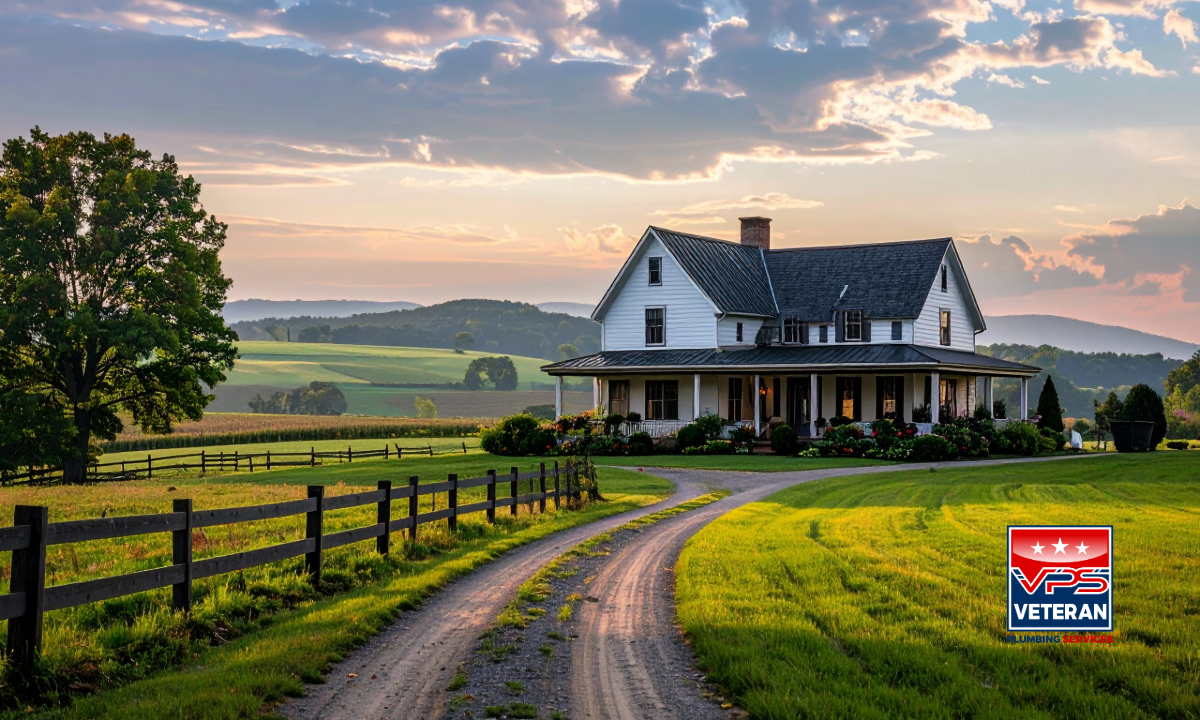
Brandy Station has one of the most historically layered landscapes in Virginia. The farmhouses and rural properties here carry that history in more than their architecture. The plumbing inside many of these homes reflects the era in which it was installed, and in some cases that era was 60 or 70 years ago. The pipes have been working ever since, which is not the same thing as working well.
Brandy Station, Virginia sits in the northeastern corner of Culpeper County along a stretch of rural Rappahannock County borderland that has been continuously farmed and inhabited for generations. The properties here range from original mid-20th century farmhouses on large acreage to more recent rural residential builds, with the oldest structures carrying the most plumbing history. Galvanized steel supply lines, hand-dug or shallow-drilled wells, original cast iron drain stacks, and pump systems installed when Eisenhower was president are still in service in a meaningful number of homes along Beverly Ford Road, Fleetwood Road, and the rural parcels north of the Route 29 corridor.
Veteran Plumbing Services serves rural properties throughout Brandy Station and Culpeper County, and the calls from this community reflect the age of the housing stock. Pressure that has dropped to a trickle, water that runs orange in the morning, drains that back up with regularity despite repeated cleaning, and well yields that cannot keep up with normal household demand are the recurring themes. This article addresses each of those problems in the context of what actually causes them in older rural Virginia farmhouses, and what the realistic repair path looks like for each.
Galvanized Pipe in Brandy Station Farmhouses — How Bad Is It?
Galvanized steel water supply pipe was the standard residential material from the early 1900s through the early 1970s. In rural Culpeper County, homes built during this era were plumbed with galvanized lines that have now been in service for 50 to 80 years. The corrosion process inside these pipes, iron oxide accumulating inward from the pipe wall, has been proceeding continuously for the entire service life of the installation.
What 60 Years of Galvanized Corrosion Actually Looks Like
A 3/4-inch galvanized supply pipe in a Brandy Station farmhouse from the 1950s may have an effective interior diameter today of 3/8 inch or less — a reduction of more than 50 percent in usable flow area. That restriction produces the pressure and flow problems that rural homeowners often attribute to a declining well yield when the well itself is fine. The water is available. It simply cannot get through the pipe at adequate volume. Until the galvanized lines are replaced, no amount of well service, pump adjustment, or pressure tank work will produce the household water pressure the homeowner expects.
The diagnostic distinction between a well yield problem and a galvanized restriction problem is one of the most practically important calls a rural Culpeper County plumber makes. Both produce the same symptom — inadequate water flow — but one requires a well pump service call and the other requires pipe replacement. A pressure test at multiple points in the home’s supply system, comparing pressure at the pressure tank outlet to pressure at end fixtures, identifies whether the drop is in the pipes or in the well supply itself.
Low-Yield Wells in Older Brandy Station Properties
Brandy Station’s older properties include a portion that were originally served by hand-dug or shallow-bored wells installed before modern drilled well technology was standard in rural Culpeper County. These shallow wells, typically less than 50 feet deep, draw from the water table rather than a confined aquifer. They are subject to yield decline during dry seasons, permanent yield reduction if the water table in the area has changed due to neighboring agricultural or residential development, and contamination risk from surface infiltration that deeper drilled wells largely avoid.
A shallow well that served a single farmhouse family with modest water use in the 1950s may be inadequate for a modern household with multiple bathrooms, a washing machine, a dishwasher, and outdoor irrigation. The well has not changed. The demand it is being asked to meet has grown considerably over decades of household evolution. For properties where the original well yield is genuinely insufficient for current demand, deepening the existing well or installing a new drilled well to a deeper aquifer is the only lasting solution.
Recognizing a Yield Problem vs a Pump Problem
A well yield problem produces gradual loss of pressure and flow that worsens with sustained use — the pressure is fine when you first open the tap in the morning and drops over the course of a shower. A pump problem often produces abrupt loss of pressure or no water at all, without the gradual decline pattern that characterizes a yield problem. Both conditions occur in older Brandy Station properties, and the diagnostic process starts at the pressure tank and works outward to determine which scenario is actually present before any equipment is ordered or labor is committed.
The layered problem in older farmhouses: Many Brandy Station properties have both galvanized pipe restriction and a marginal well yield operating simultaneously. Each problem partially masks the other during diagnosis. A plumber who addresses the pipe restriction first will reveal the true well yield situation clearly once the flow restriction is removed. The correct sequence matters: pipes first, then well assessment, rather than spending money on well work that only reveals the pipe problem was there all along.
Cast Iron Drain Lines in Older Culpeper County Farmhouses
The drain systems in Brandy Station’s older farmhouses share the same cast iron aging issues that affect mid-century homes throughout Northern Virginia, with the additional variable of Culpeper County’s agricultural water chemistry. Well water that carries higher iron and mineral content than municipal water accelerates interior drain pipe corrosion by increasing the mineral deposition on rough interior surfaces. A cast iron drain stack in a Brandy Station farmhouse that has been carrying mineral-rich well water for 60 years has a significantly rougher and more corroded interior than the same pipe carrying treated municipal water would.
The practical consequence is recurrent drain clogs that respond less and less well to mechanical clearing over time, combined with the structural wall-thinning that makes the pipe vulnerable to cracking under minor soil or structural movement. If the drain system in a Brandy Station farmhouse has not been camera-inspected in the past five years, that inspection is overdue regardless of whether symptoms are currently present.
Old Farmhouse Plumbing Issues in Brandy Station?
Veteran Plumbing Services diagnoses and repairs aging plumbing systems throughout Brandy Station and Culpeper County. We identify the actual problem before recommending any work.
Related Plumbing Reading for Culpeper County Homeowners
Aging farmhouse plumbing in Brandy Station connects to broader rural infrastructure challenges across Culpeper County. You may also want to read about how hard water from Culpeper County wells is destroying fixtures and appliances in rural homes and how the same galvanized pipe aging that affects Brandy Station farmhouses is playing out in Manassas’s older neighborhoods. Galvanized pipe has a defined service life, and rural Virginia homes are reaching the end of it at the same rate as suburban ones.
About Veteran Plumbing Services
Veteran Plumbing Services is a Veteran-owned plumbing company serving Brandy Station, Jeffersonton, Culpeper, Stevensburg, Richardsville, and communities throughout Culpeper County and Northern Virginia. We handle pipe replacement, well system diagnosis, drain camera inspection, and complete rural residential plumbing. Every job starts with an honest assessment of what is actually happening before a single dollar is committed to repairs.
References
American Society of Plumbing Engineers. (2021). Residential pipe material lifespan and corrosion rates: Field reference guide by material type and water chemistry. ASPE.
National Ground Water Association. (2022). Shallow versus drilled wells: Yield comparison, contamination risk, and upgrade considerations for rural residential properties. NGWA Technical Fact Sheet. https://www.ngwa.org
Virginia Department of Health, Office of Drinking Water. (2023). Well construction standards for Culpeper County and the Virginia Piedmont: Depth requirements, casing specifications, and yield testing. VDH. https://www.vdh.virginia.gov
U.S. Environmental Protection Agency. (2022). Iron corrosion in residential plumbing systems: Effects of source water chemistry on galvanized steel service life. EPA Office of Water. https://www.epa.gov/water-research