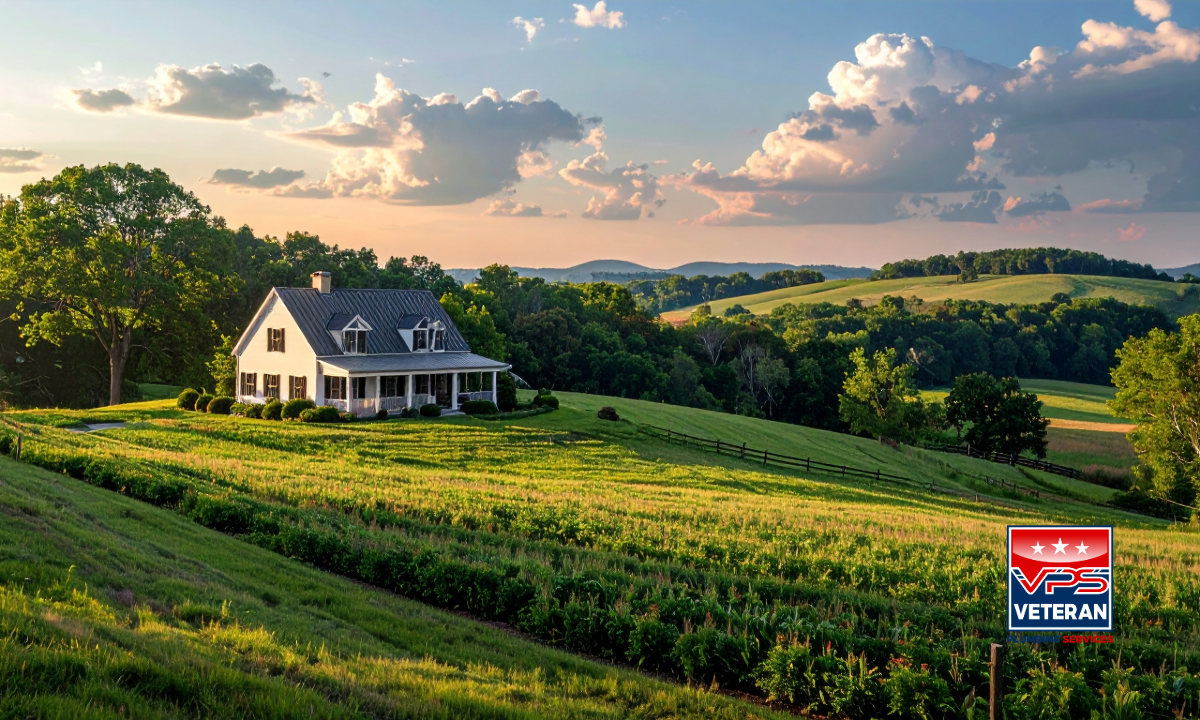
A residential well in Marshall, Virginia is designed and drilled for the water demand of a household. When that same well is also supplying a barn, a run-in shed with automatic waterers, a wash rack, and outdoor frost-free hydrants for a horse property, it is being asked to do a job it was never designed for. Most of the time it manages. Until it does not.
Marshall, Virginia sits along John Marshall Highway in the heart of Fauquier County’s horse country, where rural residential properties range from modest farmettes to significant equestrian estates along the Paris, Hume, and Orlean Road corridors. The common thread across these properties is a private water system that serves both a household and some level of agricultural operation, and the gap between what the well was sized for and what it is being asked to supply is one of the most consistent plumbing challenges Veteran Plumbing Services encounters in this part of Fauquier County.
This article covers the specific plumbing demands that equestrian and agricultural properties in Marshall place on well systems and outdoor plumbing infrastructure, the failure points that appear first when those demands exceed system capacity, and what the options look like for properties where the current setup is not meeting the need reliably.
What a Horse Property Actually Demands From a Water System
The standard assumption for residential well system sizing is household use: typically 75 to 100 gallons per person per day for normal residential activity. A horse property in Marshall adds a meaningfully different category of demand on top of that baseline.
The Water Math on a Rural Marshall Horse Property
Horse drinking water: A 1,000-pound horse in normal conditions drinks 8 to 12 gallons of water per day. In summer heat or during heavy exercise, that figure can reach 15 to 20 gallons. Four horses on a Marshall property in August can require 60 to 80 gallons per day for drinking alone, before any barn use.
Barn wash-down and equipment cleaning: A standard garden hose at 40 PSI delivers approximately 8 gallons per minute. A 30-minute barn wash-down uses 240 gallons. Weekly wash-downs add 960 gallons per month to demand that the household baseline never accounted for.
Wash rack and bathing: Bathing horses before shows or competition, or during fly and heat season, uses 50 to 100 gallons per horse per session depending on water pressure and duration.
Automatic waterers: Automatic stock waterers maintain a continuous supply that refills after each drinking episode. During peak summer demand, multiple automatic waterers can cycle frequently and collectively draw as much as a bathroom fixture running for an extended period — continuously, throughout the day.
For a property with four horses, a small household of three people, and standard barn maintenance activity, the combined daily demand can easily reach 400 to 600 gallons. A residential well in Fauquier County’s Blue Ridge foothills and Piedmont geology, drilled for household use, may have a tested yield of 2 to 5 gallons per minute — adequate for a household, but potentially marginal for a combined residential and equestrian demand profile, particularly during dry August conditions when the water table drops.
Frost-Free Hydrants — The Outdoor Plumbing Component That Fails Most Often
Frost-free hydrants, also called yard hydrants or freeze-proof hydrants, are the standard outdoor water delivery point on Marshall horse properties. Unlike a standard hose bib, a frost-free hydrant has its valve seat located 12 to 24 inches below grade, below the frost line, so that when the handle is turned off, water drains out of the vertical standpipe above grade and the valve closes underground where freezing cannot reach it. When they work correctly, they provide year-round water access without freeze risk. When they fail, they fail in specific ways that rural property owners need to recognize.
Seal and Washer Failure
The valve seat seal and the plunger rod washer in a frost-free hydrant have a service life of five to ten years under typical use. On a Marshall horse property where the hydrant is used daily and often at high volume, that service life is compressed. A worn washer or damaged valve seal allows the hydrant to drip continuously from the nozzle even when closed, or allows a slow seep at the base of the standpipe. Either symptom should be addressed promptly, because a hydrant that does not drain fully when closed will eventually freeze in the standpipe during a hard winter event, regardless of the depth of the valve seat underground.
Improper Drainage Causing Winter Freeze
A frost-free hydrant drains the standpipe after each use by allowing water to seep into a gravel pit surrounding the valve body underground. If that drainage pit becomes compacted or saturated — which happens over time on properties with heavy foot traffic or poor drainage around the hydrant installation — water remains in the standpipe after the valve closes and freezes during cold events. The standpipe cracks or the valve body fractures underground, and the homeowner discovers it when the hydrant ceases to function or begins leaking from underground. Replacing a frost-free hydrant with a failed underground valve body requires excavation to the valve depth.
The hose-left-on failure: The single most common frost-free hydrant failure on rural Virginia horse properties is also the most preventable. A hose or nozzle left connected to the hydrant after it is shut off traps water in the standpipe by preventing the drainage that makes the hydrant frost-proof. Every frost-free hydrant on a Marshall property should have a sign or a farm management protocol that ensures hoses are disconnected before the handle is closed, particularly during the period from November through March.
Supply Line Freeze Risk to Unheated Barns
Water supply lines running from the house well system to a barn, run-in shed, or outdoor trough location are among the most vulnerable freeze points on a Marshall horse property. Unlike the pitless adapter and buried supply line on the house side, barn supply lines are often installed in surface trenches at less than the required frost depth, run along the outside of barn walls in sections, or cross open ground without the thermal protection of conditioned building interior on either end. A supply line freeze in a barn water supply cuts off drinking water access for horses during exactly the weather conditions when they need water most urgently — cold, dry winter days when hydration is critical to preventing colic.
When the Well Cannot Keep Up — Options for Marshall Properties
For properties where the well yield genuinely cannot sustain combined residential and equestrian demand during peak summer conditions, three approaches address the capacity gap. A storage cistern or holding tank installed between the well and the distribution system allows the well to refill the tank slowly over time while the tank supplies peak demand that the well alone cannot meet in real time. A dedicated second well drilled specifically for barn and agricultural use separates the two demand systems and eliminates competition for a single well’s yield. A yield test on the existing well, combined with a hydrogeologist assessment of the aquifer conditions beneath the property, determines which approach is realistic for a specific Marshall County site before any money is spent on drilling or storage infrastructure.
Plumbing or Well Issues on Your Marshall Horse Property?
Veteran Plumbing Services handles frost-free hydrant repair, barn supply line service, well system diagnostics, and complete rural plumbing for equestrian properties throughout Marshall and Fauquier County.
Related Plumbing Reading for Fauquier County Homeowners
Agricultural property water demands in Marshall share root causes with plumbing challenges across rural Fauquier County. You may also want to read about how Culpeper County well pump houses and outdoor plumbing fail during hard freezes and what Warrenton homeowners need to know before switching from well to town water when well demand has outpaced supply. Both articles address the well capacity and outdoor plumbing protection questions that are most pressing for rural Fauquier County property owners.
About Veteran Plumbing Services
Veteran Plumbing Services is a Veteran-owned plumbing company serving Marshall, Warrenton, The Plains, Upperville, Bealeton, and communities throughout Fauquier County and Northern Virginia. We handle frost-free hydrant repair and installation, barn supply line service, well system diagnostics, and rural residential plumbing. Every job is done to code with honest pricing and real accountability.
References
Virginia Cooperative Extension. (2022). Water requirements for horses and livestock: Calculating daily demand for rural Virginia farm operations. VCE Publication 406-425. https://www.ext.vt.edu
National Ground Water Association. (2021). Residential well yield testing and capacity assessment for agricultural demand properties. NGWA Technical Fact Sheet. https://www.ngwa.org
Virginia Department of Health, Office of Drinking Water. (2023). Private well standards for rural Virginia residential and agricultural properties. VDH. https://www.vdh.virginia.gov/drinking-water
American Society of Agricultural and Biological Engineers. (2020). ASABE EP409.3: Agricultural water systems: Design and installation of frost-free hydrants for rural properties. ASABE Standards.