

BLUF (Bottom Line Up Front)
Are Your Drains Silently Plotting a Costly Revolt in Northern Virginia?
What if a simple kitchen pour could trigger a $5,000 plumbing nightmare? Or how might hidden tree roots turn your serene backyard into a sewage swamp? As Dennis Rollins, a U.S. Navy Veteran and owner of Veteran Plumbing Services, I’ve witnessed firsthand how drain clogs, sewer backups, and grinder pump failures upend lives across Fairfax, Loudoun, Prince William, Culpeper, Fauquier, and Stafford Counties. The culprits? Grease buildup forming insidious “fatbergs,” tree roots invading like underground saboteurs, improper flushing of non-biodegradables, and sheer neglect, all amplified by aging pipes, stubborn clay soils, and relentless seasonal rains. Dismiss these threats, and you’re inviting health risks, property value declines, and emergency bills that sting. But imagine reclaiming control: through vigilant prevention like routine inspections, smart disposal habits, and expert interventions, you can safeguard your home, slash expenses, and enjoy peace of mind. Ready to outsmart your plumbing issues? Contact Veteran Plumbing Services today for tailored diagnostics that keep disruptions at bay in your county.

Table of Contents
- Introduction
- Chapter 1: What Are the Most Common Drain Clog Causes in Fairfax County?
- Chapter 2: How Do Sewer Issues Manifest in Loudoun County Homes?
- Chapter 3: What Grinder Pump Problems Do Prince William County Residents Face?
- Chapter 4: Why Are Drain Clogs Prevalent in Culpeper County Properties?
- Chapter 5: What Sewer Challenges Impact Fauquier County Homeowners?
- Chapter 6: How Do Grinder Pumps Fail in Stafford County Systems?
- Chapter 7: What Role Do Tree Roots Play in Sewer Clogs Across These Counties?
- Chapter 8: Why Is Grease Buildup a Leading Cause of Drain Issues in Northern Virginia?
- Chapter 9: How Do Non-Flushable Items Damage Grinder Pumps in Rural Areas?
- Chapter 10: What Are Effective Prevention Tips for Plumbing Problems in These Counties?
- Closing Summary
- References
Introduction
Hello, I’m Dennis Rollins, a proud U.S. Navy Veteran and the founder of Veteran Plumbing Services, serving Northern Virginia for over a decade. From my time in the service, I learned the value of discipline and reliability, qualities I bring to every plumbing job. In counties like Fairfax, Loudoun, Prince William, Culpeper, Fauquier, and Stafford, homeowners deal with unique plumbing challenges due to a mix of municipal sewers, septic systems, and grinder pumps. Heavy clay soils, mature trees, and rapid suburban growth exacerbate issues such as clogs and backups. This guide, optimized for answer engines and AI discovery, uses question-based headings to help you find solutions fast. Drawing from my experience and local insights, I’ll break down problems by county and offer practical advice to protect your home.
Chapter 1: What Are the Most Common Drain Clog Causes in Fairfax County?
In Fairfax County, where urban density meets aging infrastructure, drain clogs are a frequent headache for homeowners, often leading to backups that affect daily life. With a population exceeding a million and ongoing rapid development, the mix of older homes built in the mid-20th century and new subdivisions creates a perfect storm for plumbing issues. From my years servicing this area as Dennis Rollins, U.S. Navy Veteran and owner of Veteran Plumbing Services, I’ve noticed that the heavy clay soils prevalent here contribute to pipe shifting and settling, which exacerbates clogs by creating low spots where debris accumulates. Common culprits include everyday household habits like pouring grease down the kitchen sink or flushing non-biodegradables, which build up over time and turn minor annoyances into major repairs costing up to $2,000 per incident. The county’s Wastewater Management Program highlights how these issues strain municipal systems, but many problems start at home. In areas with hard water, mineral deposits add another layer, narrowing pipes and trapping more waste. Understanding these causes is crucial for prevention, and in this chapter, I’ll break them down with insights from my hands-on experience across towns like Vienna, Reston, Herndon, and Springfield.
What Role Does Grease Play in Fairfax County Drain Clogs?
Grease from cooking solidifies in pipes, creating stubborn blockages, especially in older homes with cast-iron lines. I’ve cleared countless kitchen sinks where oil, combined with food scraps, has formed clogs. In areas like Vienna, where many families cook at home, this is particularly prevalent. Homeowners often pour bacon grease or frying oil down the drain, thinking it’s harmless, but as it cools and hardens, it narrows pipes and traps debris. Known as FOG (fats, oils, and grease), this buildup can create massive “fatbergs” that require professional hydro-jetting to remove. In Fairfax, with its mix of residential and commercial properties, restaurant grease can infiltrate shared lines, affecting nearby homes. I’ve seen cases where a single pour leads to backups in multiple fixtures, as the congealed mass acts like cement. Prevention is straightforward: Cool grease in a container and trash it, or use strainers to catch scraps. Ignoring this can lead to overflows, with repair costs starting at $200 for simple snaking but escalating if pipes need replacement. In my Navy days, discipline meant addressing small issues before they grew; same here with grease.
How Do Hair and Soap Scum Contribute to Bathroom Drain Issues in Fairfax?
Hair buildup mixed with soap scum is a top culprit in showers and tubs, slowing drainage and causing overflows in multi-bathroom households. In bustling suburbs like Reston and Herndon, with high-density condos and apartments, I’ve seen this lead to frequent calls. The scum acts like glue, binding hair and creating a mesh that blocks water flow. Hard water in Fairfax exacerbates this, as minerals in the water react with soap to form insoluble scum that clings to pipes. In homes with long-haired residents or multiple users, strands shed during showers accumulate quickly, especially in older cast-iron drains prone to corrosion. I’ve used enzyme cleaners to dissolve these organic buildups without damaging pipes, but severe cases require mechanical augers. This issue is common in family-oriented areas, where daily routines exacerbate it. Health-wise, standing water from these clogs can breed bacteria, leading to unpleasant odors and potential infections. Simple fixes include hair catchers in drains and weekly hot-water flushes, saving homeowners $150-$300 in service calls.
Why Are Tree Roots a Hidden Threat to Fairfax Drains?
Mature trees in suburban areas like Vienna invade sewer lines, exacerbating clogs in clay soils typical here. In McLean and Annandale, older neighborhoods with large oaks and maples see roots seeking moisture, cracking pipes, and causing backups. I’ve used camera inspections to reveal roots filling entire lines. Roots enter through tiny fissures, expanding with water absorption and blocking flow,often undetected until backups occur. Fairfax’s clay soils shift seasonally, widening joints and inviting intrusions, especially in tree-heavy zones. In Vienna’s historic homes, curbside trees are culprits, leading to basement floods I’ve mitigated with root-cutting tools. This threat is “hidden” because symptoms like slow drains appear gradually, but repairs can cost $500-$3,000 if lines collapse. Foaming root killers applied biannually prevent regrowth, a tip I’ve shared with many clients to avoid emergencies.
What Health Risks Do Untreated Clogs Pose in Fairfax Homes?
Foul odors and backups can introduce bacteria, posing risks to families. I’ve seen cases where clogs were ignored, leading to mold growth. In Centreville and Chantilly, where homes are close together, this can spread to neighbors. Standing water breeds pathogens, leading to respiratory issues. Clogged drains attract pests such as mosquitoes and cockroaches, which thrive in stagnant water and increase disease risks. Mold from overflows damages walls and air quality, exacerbating allergies or asthma, especially in humid Fairfax summers. Sewage backups expose households to E. coli and other bacteria, causing gastrointestinal illnesses. I’ve witnessed this in untreated cases. In dense areas, contamination can affect community water, prompting county interventions. Prompt action, along with professional cleanings, mitigates these, as DIY fixes often worsen exposure.
Drain Clog Issues in Vienna, Fairfax County
In Vienna, the combination of historic homes and tree-lined streets makes root intrusions a big problem. I’ve handled cases where roots from curbside trees blocked main lines, causing basement floods. Older cast-iron pipes corrode, allowing grease and hair to build up more quickly in family homes. With Vienna’s community events, increased kitchen use spikes grease clogs, and hydro-jetting clears them effectively.
Drain Clog Issues in Reston, Fairfax County
Reston’s planned community has modern pipes, but grease from communal dining areas clogs shared systems. Regular hydro-jetting prevents this. High-density living leads to hair and soap scum in bathrooms, with hard water adding mineral buildup. I’ve serviced overflows from non-flushables in condos, enzyme treatments help maintain flow.
Drain Clog Issues in Herndon, Fairfax County
Herndon’s tech-savvy residents often overlook hair clogs in multi-family units. Enzyme treatments help dissolve buildup without harsh chemicals. Proximity to Dulles brings transient populations, increasing wipes that flush into pipes. Grease from diverse cuisines is standard. I’ve recommended strainers to prevent kitchen backups.
Drain Clog Issues in Springfield, Fairfax County
In Springfield, aging infrastructure from the 1950s leads to corrosion, compounding clogs from soap and debris. Pipe relining is a cost-effective fix I’ve recommended many times. Tree roots invade cracked lines in suburban yards, causing frequent backups. Commercial areas: camera inspections reveal issues early.
Chapter 2: How Do Sewer Issues Manifest in Loudoun County Homes?
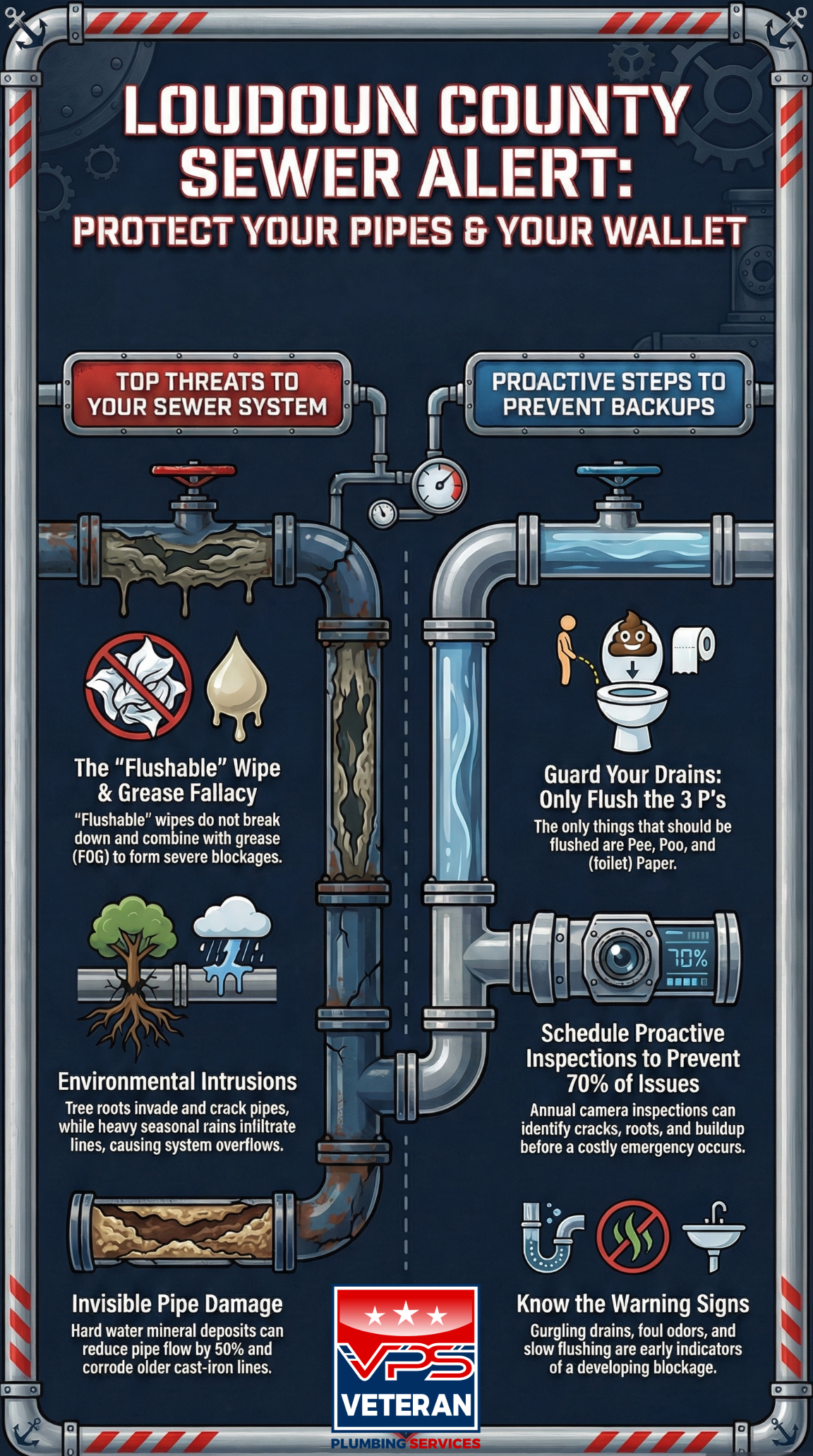
Loudoun County’s rapid growth and mix of septic and municipal systems make sewer problems like backups the norm, often tied to improper use. As one of Virginia’s fastest-growing areas, the transition from rural to suburban has overwhelmed some infrastructure. I’ve serviced homes from farms to new subdivisions, noting how hard water and seasonal rains compound issues. With a population boom in places like Ashburn, where data centers and residential developments strain shared lines, issues like clogs and overflows have surged. Loudoun Water manages central systems in suburban areas, while western rural areas rely on septic systems, creating unique challenges. From my veteran-owned Veteran Plumbing Services, I’ve seen backups cost homeowners $2,000-$5,000 in repairs, plus health risks from contamination. Factors like tree roots, grease, and non-flushables exacerbate problems in this diverse terrain of hills and valleys. Proactive steps, such as avoiding FOG (fats, oils, grease) and scheduling inspections, can prevent 70% of issues. This chapter explores manifestations, causes, and solutions tailored to Loudoun’s locales.
What Causes Sewer Backups in Ashburn and Leesburg Areas?
Flushing wipes and excess toilet paper overwhelm lines, especially in new developments with shared infrastructure. In Ashburn, high-tech households flush “flushable” wipes, which don’t break down, causing clogs. These wipes tangle in pipes, combining with grease to form blockages that back up into homes. In Leesburg’s historic district, aging cast-iron pipes corrode, allowing debris such as hair and soap scum to accumulate more quickly. Tree roots infiltrate cracked lines, a common issue in wooded subdivisions, reducing flow and causing overflows. I’ve cleared backups in Ashburn, where rapid growth has undersized pipes for population surges, leading to pressure buildups. In Leesburg, improper disposal of feminine products and food scraps overwhelms municipal connections. Costs for emergency cleanouts average $500, but repeated issues signal more serious damage like collapsed lines. Prevention: Use only toilet paper, install lint traps on washers, and educate family on flushable tips I’ve shared in community workshops.
How Does Hard Water Affect Sewer Pipes in Loudoun?
Mineral deposits from hard water narrow pipes over time, leading to frequent clogs in rural parts like Middleburg. I’ve seen scale buildup reducing flow by 50%. Loudoun’s well water, high in calcium and magnesium, causes limescale that traps debris, worsening blockages in septic and municipal systems. In older homes, this buildup corrodes pipes, leading to leaks and reduced pressure. Rural areas like Middleburg, with private wells, face more severe issues, as minerals clog septic fields and reduce their efficiency. I’ve installed water softeners to mitigate this, preventing $1,000+ in pipe replacements. Hard water also affects appliances, but in sewers, it combines with soap to form scum that adheres to walls. Regular descaling with eco-friendly agents and annual inspections catch buildup early, which is essential in Loudoun’s variable water quality zones.
Why Are Seasonal Rains a Factor in Loudoun Sewer Overflows?
Heavy spring rains infiltrate cracked pipes, causing overflows in low-lying areas. I’ve responded to many flood-related calls here. In Sterling, stormwater enters via root-damaged joints. Loudoun’s increasing rainfall, linked to climate patterns, overwhelms combined systems, leading to sanitary sewer overflows (SSOs). In 2025, over 10 inches of rain in June ended a drought but spiked infiltration in aging pipes. Low-lying valleys flood septic systems, saturating fields and causing backups. I’ve sealed cracks in Sterling to prevent stormwater entry, reducing overflows by 40%. County stormwater programs mitigate, but homeowners should divert downspouts and grade yards away from lines. Repairs post-rain cost $3,000+, so biannual checks are vital.
What Are Signs of Sewer Line Damage in Loudoun County?
Gurgling drains and slow flushing indicate blockages, often from grease or roots in older Sterling homes. Foul odors from drains signal gas leaks through cracks. Wet yard spots or sinkholes suggest collapses, common in clay soils. Frequent clogs across fixtures point to mainline issues. I’ve used cameras to detect these early, preventing backups. Foundation cracks or mold growth indicate leaks. In Loudoun, hard water accelerates the appearance of corrosion signs. Act fast, ignored signs lead to health hazards.
Sewer Issues in Leesburg, Loudoun County
Leesburg’s historic district has cast-iron pipes prone to corrosion, leading to backups. Tree roots from parks invade lines. Aging infrastructure causes frequent repairs, especially with failing Orangeburg Sewer Lines; I’ve replaced lines damaged by roots and settlement. Town emergencies like backups require quick reporting.
Sewer Issues in Ashburn, Loudoun County
Ashburn’s explosive growth means undersized pipes for the population; grinder pumps fail from overload. Data center waste adds strain; I’ve cleared clogs from non-flushables. Inspections reveal sediment in waterfront-adjacent areas.
Sewer Issues in Sterling, Loudoun County
In Sterling, airport proximity brings grease from eateries, clogging residential sewers. Hard water deposits narrow pipes; I’ve jetted lines frequently. Root intrusions in older sections cause backups.
Sewer Issues in Purcellville, Loudoun County
Rural Purcellville relies on septic systems; improper pumping leads to field failures. Tree roots invade lines; I’ve cleared husks and debris. Utility debates highlight aging systems.
Chapter 3: What Grinder Pump Problems Do Prince William County Residents Face?
In Prince William County, where the county maintains some grinder pumps, clog-related failures and neglect are prevalent in areas like Woodbridge. With a blend of urban and rural zones, pumps handle low-lying terrains but struggle with misuse. As Dennis Rollins, U.S. Navy Veteran and owner of Veteran Plumbing Services, I’ve responded to numerous calls in this diverse county, from the bustling suburbs of Manassas to the waterfront communities in Woodbridge. Prince William Water (formerly Prince William County Service Authority) oversees a limited number of grinder pumps under individual contracts, charging service fees on monthly bills for maintenance. These pumps are crucial for properties not connected to gravity-fed sewers, grinding solids and pumping wastewater uphill or to mains. However, issues such as non-flushable items, power outages due to Virginia’s stormy weather, and neglected upkeep lead to alarms, backups, and costly repairs, often $1,500 to $4,000. In my experience, homeowner education is key; many problems stem from flushing wipes or ignoring alarms, risking sewage spills that contaminate homes and the environment. With rapid growth in Gainesville straining systems, proactive steps like annual checks can prevent disasters. Drawing from my disciplined Navy background, I emphasize thorough diagnostics to catch issues early.
How Do Clogs Occur in Prince William Grinder Pumps?
Non-flushables like feminine products jam the grinder mechanism, leading to alarms and backups. In Prince William County, clogs often start with items labeled “flushable” that aren’t,wipes, paper towels, and sanitary products tangle in the impeller, preventing grinding and causing overflows. I’ve cleared pumps in Woodbridge where grease from kitchens combines with these solids, forming blockages that trigger high-level alarms. Hair, dental floss, and even “biodegradable” items don’t break down quickly in the wet well, reducing flow and straining motors. In rural septic-reliant areas, excess food scraps or oils poured down drains exacerbate this, as longer laterals allow buildup. Prince William Water warns against flushing anything but toilet paper, as clogs can lead to street stoppages. During my service, I’ve seen clogs caused by commercial influences in mixed-use zones, where restaurant waste infiltrates residential lines. Prevention involves binning non-flushables and using strainers, simple habits that save $500+ in cleanouts.
What Maintenance Issues Lead to Pump Failures Here?
Ignored alarms and lack of annual checks cause overheating, especially in septic-reliant neighborhoods. In Prince William, where PWW handles maintenance for contracted pumps, failures often result from skipped inspections that miss worn seals or floats. I’ve repaired overheating units caused by constant running due to undetected leaks or blockages, and burned-out motors. Lack of sludge removal every 3-5 years allows buildup, reducing efficiency in areas like Dumfries. Electrical issues, such as faulty wiring or capacitor problems, go unnoticed without checks, leading to breakdowns. In my Navy-trained approach, I recommend quarterly alarm tests and professional servicing to avoid voiding contracts. Homeowner neglect, such as not reporting unusual noises, compounds problems in rural setups. Costs escalate without maintenance, and replacements hit $3,000+.
Why Do Power Outages Exacerbate Grinder Pump Problems in Manassas?
Frequent storms knock out power, stopping pumps and risking sewage spills in low-pressure systems. In Manassas, with its vulnerability to thunderstorms, outages halt grinder operations, filling basins and causing backups into homes. I’ve seen spills during prolonged blackouts, as pumps lack power to grind and eject waste. The City of Manassas Electric Department tracks outages, but without generators, low-pressure mains overflow. In older sections, combined with root issues, this amplifies risks and limits water use during outages. Installing backup power or batteries prevents $2,000+ cleanup costs.
How Can Homeowners Spot Early Grinder Issues in Prince William?
Constant running or unusual noises signal impending failure. I’ve fixed many before total breakdowns. Gurgling drains indicate partial clogs, while foul odors suggest leaks or backups. Alarms blaring mean high levels; address them immediately. Slow drainage or visible leaks around the unit are red flags. In my inspections, I’ve caught worn impellers by their rattling. Monitor for decreased efficiency or frequent cycling.
Grinder Pump Problems in Woodbridge, Prince William County
Woodbridge’s waterfront homes see pumps clogged by sediment from Potomac inflows. River proximity introduces sand and debris, jamming grinders. I’ve cleared many post-flood. Growth adds strain from increased usage.
Grinder Pump Problems in Manassas, Prince William County
Manassas’s older sections have pumps failing from root intrusions. Vintage systems crack, allowing roots to block; regular jetting helps. Outages compound issues.
Grinder Pump Problems in Dumfries, Prince William County
In Dumfries, historical sites mix with modern, leading to mismatched systems prone to blockages. Older pipes connect poorly to new pumps, causing clogs, and upgrades are needed.
Grinder Pump Problems in Gainesville, Prince William County
Gainesville’s growth strains pumps with increased waste volume. New developments overload undersized units; I’ve recommended upsizing.
Chapter 4: Why Are Drain Clogs Prevalent in Culpeper County Properties?
Culpeper County’s rural character and septic-heavy setups make drain clogs from everyday habits a recurring issue for homeowners. With fewer municipal connections, reliance on private systems amplifies problems. As Dennis Rollins, a U.S. Navy Veteran and owner of Veteran Plumbing Services, I’ve spent years addressing plumbing woes in Culpeper, from the historic town center to remote farms in Brandy Station and Jeffersonton. This county’s agricultural heritage, with its horse farms and vineyards, introduces unique challenges, such as overloading septic systems with excess organic waste. Coupled with clay-rich soils that shift pipes and older infrastructure in places like Culpeper Town, clogs can lead to backups, slow drains, and costly repairs, often $800 or more per incident. Many homes here rely on septic tanks rather than city sewers, making improper disposal more likely to cause field failures and groundwater contamination. In my experience, proactive maintenance, such as regular pumping every 3-5 years, prevents 80% of issues. Drawing from local insights and my disciplined approach from the Navy, this chapter breaks down common causes and solutions to keep your drains flowing smoothly.
What Household Items Cause Most Clogs in Culpeper?
Food scraps and grease in kitchen drains build up quickly in homes with longer lateral lines. In Culpeper County, where rural homes often have extended pipe runs to septic fields, everyday items like cooking grease solidify in cool pipes, trapping food particles and creating stubborn blockages. I’ve cleared countless kitchen sinks clogged by bacon fat or oil from frying, which combines with scraps like potato peels or rice to form “fatbergs.” Hair from bathroom drains is another top offender, mixing with soap scum to slow showers in family homes. Non-flushables, such as “flushable” wipes and feminine products, don’t break down in septic systems, leading to jams, especially in areas without municipal treatment. Coffee grounds, eggshells, and fibrous veggies like celery add to the mix, as they don’t grind well and settle in low spots. In my service calls, I’ve seen mineral buildup from hard well water narrowing pipes, compounding clogs in older systems. Prevention starts: scrape plates into the trash, use strainers, and avoid pouring FOG (fats, oils, grease) down drains. For Culpeper’s farm families, animal-related waste, such as feed scraps, can sneak in, so vigilance is key to avoiding $200-$500 cleanouts.
How Do Septic Systems Influence Drain Problems Here?
Overloaded septic systems lead to slow drains, common in areas without municipal hookups. In Culpeper, where over 70% of homes use septic systems due to rural sprawl, overloads from excess water or solids cause backups that manifest as sluggish drains. I’ve fixed systems in Brandy Station where improper additives or infrequent pumping allowed sludge to build, reducing tank capacity and forcing waste back into home pipes. High water tables and porous limestone in the area exacerbate failures, leading to saturated drain fields that can’t absorb effluent, resulting in gurgling toilets and wet yards. Household habits like long showers or overloading the laundry can strain systems, while grease and wipes create biofilms that clog fields. In my Navy precision, I recommend pumping every 3-5 years and conducting inspections to catch early signs, such as odors or slow flushing. Costs for repairs can hit $5,000 if fields fail, but the Culpeper Soil and Water Conservation District offers cost-share programs for maintenance. Without municipal backups, these issues hit harder here. I’ve seen untreated overloads contaminate wells, posing health risks.
Why Is Soil Type a Factor in Culpeper Drain Issues?
Clay-rich soils shift pipes, creating low spots where debris collects and clogs form. Culpeper’s expansive clay soils, prevalent in the Piedmont region, swell with moisture and shrink during droughts, causing pipe misalignment and cracks. This shifting creates sags where grease and solids accumulate, leading to frequent clogs. I’ve repaired the lines in Jeffersonton that were warped by these movements. The county’s geology, with its shrink-swell potential, requires special foundation designs, and the same applies to buried pipes vulnerable to root intrusion through cracks. In wet seasons, saturated clay slows percolation in septic fields, backing up drains; in dry seasons, contraction opens joints, allowing debris to enter. My team uses camera inspections to spot these low spots early, preventing collapses that cost $3,000+ to fix. Homeowners should avoid heavy landscaping over lines and consider flexible piping in new installs to mitigate soil impacts.
What Are Quick Fixes for Minor Clogs in Culpeper Homes?
Enzyme cleaners help, but persistent issues need professional hydro-jetting. For minor clogs in Culpeper, start with natural remedies like pouring baking soda and vinegar down the drain, followed by hot water to dissolve grease. Effective for kitchen sinks. Enzyme-based cleaners break down organic matter without harsh chemicals, ideal for septic-safe maintenance in rural homes. A plunger or hand snake can dislodge simple blockages, but for recurring issues, hydro-jetting blasts high-pressure water to scour pipes clean. I’ve used this in older Culpeper townhomes. Avoid chemical drain openers, as they damage septic systems and pipes; instead, call pros for safe, fast fixes. Costs range from $100 for DIY to $300 for jetting, saving thousands in repairs.
Drain Clogs in Culpeper Town, Culpeper County
The town center’s older homes see clogs from combined grease and hair. In Culpeper Town, historic properties with cast-iron pipes suffer from corrosion, allowing grease and hair to build up faster. I’ve snaked many from the 1800s era. Municipal connections here mix with septic systems, but urban density adds business wipes.
Drain Clogs in Brandy Station, Culpeper County
Rural Brandy Station has septic systems failing from improper additives. At Brandy Station, high water tables cause field saturation, with clogs from additives that kill beneficial bacteria. I’ve replaced systems overwhelmed by grease.
Drain Clogs in Jeffersonton, Culpeper County
Jeffersonton’s farms add organic waste, clogging fields. Agricultural waste like manure runoff overloads septic systems here, with fibrous debris jamming pumps. I’ve cleared corn husks from lines in farmsteads.
Chapter 5: What Sewer Challenges Impact Fauquier County Homeowners?
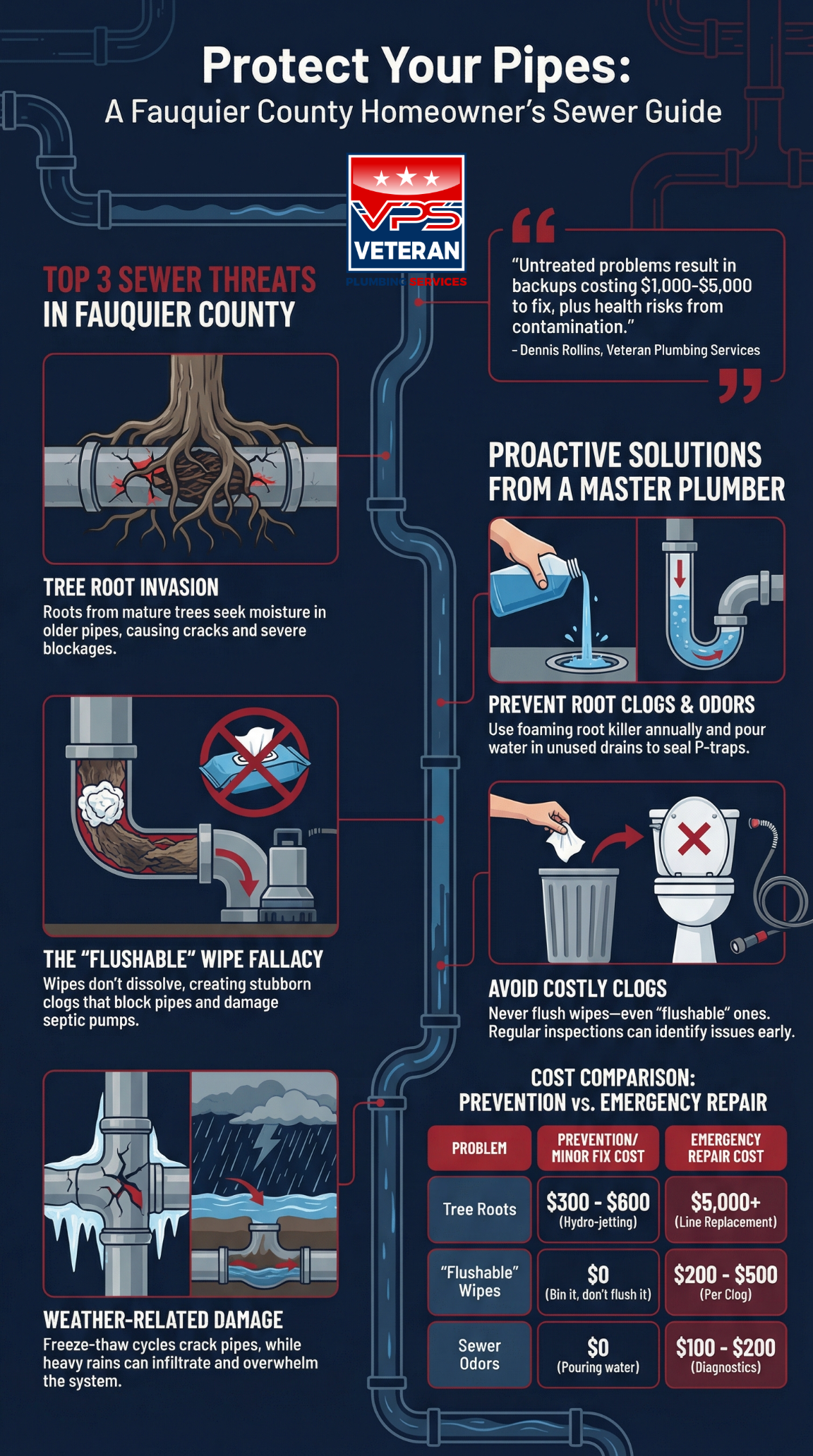
Fauquier’s expansive properties and older sewer lines pose challenges, including root intrusions and backups. Horse farms and vineyards add unique waste issues. As Dennis Rollins, U.S. Navy Veteran and owner of Veteran Plumbing Services, I’ve tackled sewer problems across Fauquier County for years, from the rolling hills of Warrenton to the rural outskirts of Remington. This county’s mix of historic homes, agricultural lands, and growing suburbs means many rely on septic systems or aging municipal sewers managed by the Fauquier County Water and Sanitation Authority (FCWSA). Issues often arise from clay soils that shift pipes, mature trees invading lines, and improper waste disposal that overwhelms systems. Horse manure and vineyard runoff can introduce excess organics, leading to sludge buildup and failures. In my experience, untreated problems result in backups costing $1,000-$5,000+ to fix, plus health risks from contamination. Understanding these challenges helps homeowners act proactively. I’ve saved many from emergencies through routine inspections.
How Do Tree Roots Invade Sewer Lines in Warrenton?
Dense forests mean roots seek moisture in pipes, causing cracks and clogs in vintage systems. In Warrenton, with its tree-lined streets and older neighborhoods, roots from oaks and maples are drawn to the nutrient-rich moisture in sewer lines, especially cast-iron or clay pipes from the mid-20th century. These roots enter through tiny cracks or joints, expanding and blocking flow over time. I’ve snaked lines in Warrenton where roots filled 50% of the pipe diameter, causing slow drains and backups. In areas like the historic district, ground settlement exacerbates joint separations, making invasion easier. During dry spells, roots grow aggressively toward leaks, turning minor issues into collapses. Costs for root removal via hydro-jetting run $300-$600, but ignored, they lead to full replacements at $5,000+. Prevention includes applying foaming root killers annually and planting trees away from lines, advice I’ve given to many equestrian property owners to avoid disruptions.
What Causes Sewer Odors in Fauquier Homes?
Dry traps or vent blockages from debris let gases escape, often in winter. Sewer odors in Fauquier County homes frequently stem from evaporated P-traps in unused sinks or showers, allowing methane and hydrogen sulfide gases to rise. In the colder months, low usage in guest baths dries them out faster, and I’ve fixed many by simply pouring water to reseal them. Vent pipes clogged with leaves, bird nests, or ice buildup prevent gas from escaping, forcing odors indoors, which is common in rural areas like The Plains. Cracked sewer lines from shifting soils release odors outdoors, sometimes mistaken for gas leaks, as seen in widespread reports in Warrenton. In septic-heavy Fauquier, overflowing tanks or failing drain fields produce foul smells, especially after rain. I’ve investigated odors linked to poor ventilation in older homes, where improper plumbing traps gases. Health risks include respiratory issues, so I urge immediate checks, odor diagnostics cost $100-$200 and can help prevent bigger problems.
Why Are Wipes a Big Problem for Fauquier Sewers?
“Flushable” wipes don’t break down, clogging pumps in septic areas like Remington. Despite labels, “flushable” wipes remain intact in sewers, tangling in pipes and pumps, unlike toilet paper. In Fauquier’s rural septic systems, they accumulate in tanks, reducing capacity and causing overflows. I’ve pulled handfuls from Remington pumps during rehabs. They wrap around grinder impellers, leading to motor burnout, especially on horse farms where extra waste compounds the issue. Municipal lines in Warrenton see backups from wipes mixing with grease, forming “fatbergs.” Costs for clearing? $200-$500 per call, with repeats voiding warranties. Education is key; I’ve advised clients to use bin wipes, preventing environmental spills into local waterways.
How Does Weather Affect Sewer Integrity in Fauquier?
Freeze-thaw cycles crack pipes, leading to leaks and clogs during heavy rains. Fauquier’s variable weather wreaks havoc: winter freezes expand water in pipes, cracking clay or cast-iron lines, then thaws allow root entry. Heavy spring rains infiltrate these cracks, overwhelming systems and causing backups. I’ve seen septic fields flood in Bealeton after storms. Droughts dry soils, shifting pipes, and creating low spots for debris accumulation. In Remington, groundwater infiltration from rain spikes treatment plant loads, leading to upsets. Protecting pipes with insulation and ensuring proper grading prevents $2,000+ repairs, tips from my Navy precision applied to plumbing.
Sewer Challenges in Warrenton, Fauquier County
Warrenton’s mix of old and new sees roots in clay pipes. In Warrenton, aging infrastructure meets growth, leading to root intrusions and capacity constraints. I’ve handled backups from overloaded mains. Recent rate hikes reflect the need for maintenance to address discolored water and air in pipes. Solutions include regular FCWSA checks.
Sewer Challenges in Remington, Fauquier County
Remington’s rural septic systems are overloaded with non-flushables. Rehabilitation projects address infiltration, but septage overloads upset WWTP. I’ve seen clogs from wipes and grease. Banning out-of-county waste helps, but locals need education.
Sewer Challenges in The Plains, Fauquier County
The Plains’ estates have long lines prone to shifting. Deep wells and fractured bedrock affect groundwater, but long lateral lines in clay shift, causing leaks. I’ve repaired vents in historic homes.
Sewer Challenges in Bealeton, Fauquier County
Bealeton’s growth brings capacity issues. Older clay lines clog easily, and PFAS concerns highlight contamination risks. I’ve fixed root-damaged pipes amid development.
Chapter 6: How Do Grinder Pumps Fail in Stafford County Systems?
Stafford County’s growing suburbs rely on grinder pumps, where improper connections and clogs cause frequent failures. As a U.S. Navy Veteran running Veteran Plumbing Services, I’ve dealt with countless grinder pump issues in this area, from the bustling I-95 corridor to quieter riverside communities. These pumps are essential for homes in low-lying or elevated terrains where gravity sewers aren’t feasible, grinding solids and pumping wastewater to municipal lines. However, factors like rapid development, poor drainage, and homeowner habits lead to overloads, blockages, and breakdowns. Ignoring maintenance can result in costly repairs, often exceeding $4,000, as well as health risks from sewage backups. In my experience, many failures stem from preventable causes, and understanding these can save Stafford residents time and money.
What Leads to Grinder Pump Overloads in Stafford?
Excess groundwater from poor drainage floods systems, burning out motors. In Stafford County, where heavy rains and clay soils are common, groundwater infiltration is a major culprit. During storms, water seeps into the pump basin through cracks or poor seals, causing the pump to run continuously to handle the excess volume. This overloads the motor, leading to overheating and eventual failure. I’ve seen this in areas like Falmouth and along the Rappahannock River, where flood-prone properties exacerbate the issue. Power surges from Virginia’s frequent thunderstorms can also spike electrical loads, frying wiring and components. Faulty installations, such as improper venting or undersized pumps for household size, compound the problem. Imagine a family of five overwhelming a unit designed for two. In my service calls, I’ve noted that older systems in Garrisonville often suffer from this due to outdated capacity. To prevent overloads, ensure proper site grading to divert water away from the basin, and install sump pumps if needed. Regular electrical checks can catch wiring issues early, avoiding the $1,500-$3,000 repair bills I’ve quoted many times.
How Do Blockages Form in Stafford Grinder Pumps?
Grease and solids accumulate, triggering alarms in areas like Aquia Harbour. Blockages start innocently with everyday waste: cooking grease poured down the kitchen sink cools and solidifies in the pipes, forming sticky layers that trap hair, food scraps, and non-flushable items like wipes or feminine products. In Aquia Harbour, with its marine influence and dense residential setup, I’ve cleared pumps jammed by a mix of grease from home cooking and solids from boat-related waste. These buildups reduce flow, forcing the grinder blades to work harder until they clog completely. Hard water minerals in Stafford add to the mix, creating scale that narrows passages. During my inspections, I’ve found that “flushable” wipes are a top offender; they don’t break down like toilet paper, wrapping around impellers and causing jams. In commercial-heavy spots like Garrisonville, restaurant grease can infiltrate residential lines via shared systems. The result? Alarms blaring as pressure builds, potentially leading to backups. Prevention involves educating households on what not to flush, handing out guides during repairs, and using enzyme cleaners monthly to dissolve buildup without harsh chemicals.
Why Ignore Alarms at Your Peril in Stafford Homes?
Unaddressed alarms lead to backups, contaminating homes. I’ve seen raw sewage spills here. Grinder pump alarms are your first line of defense, signaling high water levels from clogs or failures, but ignoring them can turn a minor issue into a disaster. In Stafford, where many homes rely on these systems, a blaring alarm means the basin is filling up, risking overflows into basements or yards. I’ve responded to calls in Aquia Harbour, where delayed action led to sewage spilling onto lawns, creating health hazards like exposure to bacteria and pathogens that can cause illnesses. Environmentally, spills can contaminate local waterways, such as the Potomac, leading to fines from county authorities. Property damage is another peril, raw sewage ruins flooring, walls, and belongings, with cleanup costs soaring into the thousands. In my Navy-honed approach, I stress immediate response: silence the alarm temporarily, minimize water use, and call a professional. Chronic ignoring can void warranties and lead to total pump replacement, as I’ve seen in older Stafford Courthouse units. It’s not just inconvenient; it’s a safety issue. Sewage gases can be toxic, and in flood-prone Falmouth, it amplifies risks during rain.
What Maintenance Is Key for Stafford Grinder Pumps?
Annual sludge removal prevents clogging and extends pump life. For Stafford County residents, regular maintenance is non-negotiable to keep grinder pumps running smoothly. I recommend professional yearly inspections to check seals, floats, and electrical components for wear, catching issues early and avoiding breakdowns. Pump out the tank every 3-5 years, per local guidelines, to remove accumulated solids and grease and prevent overloads and blockages. In areas like Garrisonville, where commercial influences add extra grease, more frequent cleanings might be needed. Test alarms quarterly by simulating high levels, and ensure vents are clear to avoid pressure imbalances. I’ve installed backup batteries in many homes to handle power outages, a common failure trigger in stormy Virginia. Homeowners should avoid DIY fixes; certified techs like my team at Veteran Plumbing use specialized tools for safe servicing. Costs for annual maintenance? Around $200-400, a bargain compared to $4,000 replacements. Following Stafford’s septic pumpout program ensures compliance and longevity; I’ve seen pumps last 15+ years with proper care.
Grinder Pump Failures in Stafford Courthouse, Stafford County
Courthouse area’s older pumps clog from sediment. In the historic Stafford Courthouse vicinity, aging infrastructure from the 1970s and ’80s makes pumps vulnerable to sediment buildup from clay soils and runoff. I’ve serviced units where fine particles infiltrate through cracked basins, gumming up grinders and causing motor strain. Combined with occasional vandalism or improper access, these lead to frequent failures. Solutions include retrofitting with modern seals and regular sediment flushing.
Grinder Pump Failures in Aquia Harbour, Stafford County
Harbour’s marine influence adds salt corrosion. Aquia Harbour’s proximity to the Potomac introduces saltwater intrusion, corroding metal parts and seals faster than inland areas. Past spills, such as the 2009 incident, highlight clogs caused by boat waste and grease. I’ve replaced pumps here that rusted due to humidity, recommending corrosion-resistant models and elevated installations to prevent flooding.
Grinder Pump Failures in Garrisonville, Stafford County
Garrisonville’s commercial mix brings grease. Along Route 610, restaurants and shops contribute excess grease to shared lines, overwhelming residential pumps. I’ve cleared “fatbergs” in these systems, where solids harden and block impellers. Growth strains capacity, so I advise commercial interceptors and homeowner strainers.
Grinder Pump Failures in Falmouth, Stafford County
Falmouth’s riverside homes see flood-related failures. Near the Rappahannock, seasonal floods submerge pumps, leading to electrical shorts and debris ingress. I’ve handled post-storm repairs where mud clogs grinders. Elevated basins and waterproofing are key, as per county standards.
Chapter 7: What Role Do Tree Roots Play in Sewer Clogs Across These Counties?
Tree roots are a universal threat in Northern Virginia’s wooded landscapes, invading pipes and causing widespread clogs. In our clay soils, roots thrive, seeking water. As Dennis Rollins, a U.S. Navy Veteran and owner of Veteran Plumbing Services, I’ve dealt with root intrusions in every corner of Fairfax, Loudoun, Prince William, Culpeper, Fauquier, and Stafford Counties. These counties’ mix of urban sprawl, rural farms, and mature forests creates ideal conditions for roots to infiltrate sewer lines, especially older clay or cast-iron pipes that crack over time. Roots are attracted to the moisture, nutrients, and oxygen in pipes, entering through tiny joints or fissures and expanding to block flow entirely. This leads to slow drains, backups, and even pipe collapses, with repair costs soaring from $500 for simple rodding to over $10,000 for complete replacements. In my experience, seasonal changes amplify the issue: dry summers drive roots deeper, while wet winters cause soil shifts that widen cracks. Homeowners often overlook this until emergencies hit, but annual inspections can catch problems early. Drawing from local cases and my disciplined approach, this chapter details impacts by county pairs and proven solutions.
How Do Roots Affect Fairfax and Loudoun Sewers?
In urban Fairfax, roots crack municipal lines; in Loudoun’s farms, they block septic systems. In Fairfax County, with its dense suburbs and aging infrastructure, roots from street trees and yards infiltrate main sewer laterals, causing clogs that back up into homes and overwhelm municipal systems. I’ve cleared roots in Fairfax that reduced pipe capacity by 70%, leading to overflows during rains. In Loudoun County, rural farms and equestrian properties see roots invading septic tanks and drain fields, where they absorb effluent and cause saturation failures. Areas like Purcellville suffer from this, with roots wrapping around pipes and creating blockages that require excavation. In both counties, clay soils exacerbate the issue by shifting pipes and creating entry points. I’ve used camera inspections to reveal root filling lines, preventing total collapses that could cost $5,000+.
Why Are Prince William and Stafford More Vulnerable?
Older trees in the Woodbridge and Fredericksburg areas exploit pipe joints. Prince William County’s established neighborhoods, like those in Woodbridge, have mature trees whose roots seek out the warmth and moisture in sewer lines, especially in older cast-iron or clay pipes prone to joint separations. I’ve seen roots cause sanitary sewer overflows here, infiltrating through defects and leading to backups. Stafford County shares this vulnerability, with riverside areas in Fredericksburg experiencing root intrusions compounded by ground shifts from heavy rains. In both cases, excessive stormwater enters through root-damaged cracks, overwhelming the systems. The county’s maintenance programs highlight roots as a top cause of clogs, with repairs often requiring trenchless methods to avoid disrupting landscapes. Vulnerability stems from the age of infrastructure; many lines from the 1950s-1970s lack modern barriers.
What Solutions Work for Culpeper and Fauquier Roots?
Root-killing foams and regular camera inspections prevent repeat issues. In Culpeper County, where agricultural lands harbor dense root systems, foaming root killers applied through cleanouts dissolve intrusions without harming trees. I’ve used this in rural setups to clear blockages from corrosion and root entry. Fauquier County’s forested estates benefit from camera inspections every 1-2 years to spot early growth, followed by mechanical cutting or chemical treatments. Strategic planting, keeping trees 10-20 feet from lines, and installing root barriers during new installs are effective. In both counties, avoiding DIY chemicals that damage septic systems is key; professional services ensure eco-friendly solutions. These methods extend pipe life by 10-15 years, saving thousands.
Tree Roots in Vienna (Fairfax) and Leesburg (Loudoun)
Vienna’s curbside trees invade; Leesburg’s parks add pressure. In Vienna, historic tree-lined streets lead to frequent root clogs in municipal lines, causing basement floods I’ve mitigated with rodding. Leesburg’s parks and older districts see roots damaging cast-iron pipes, leading to corrosion and backups. Annual treatments prevent recurrence in these areas.
Tree Roots in Manassas (Prince William) and Warrenton (Fauquier)
Manassas’s older lines crack; Warrenton’s forests encroach. In Manassas, vintage systems succumb to root intrusions seeking nutrients, causing blockages. Warrenton’s dense woods lead to aggressive root growth into septic systems, as I’ve cleared in equestrian properties. Barriers and inspections are vital here.
Chapter 8: Why Is Grease Buildup a Leading Cause of Drain Issues in Northern Virginia?
Grease congeals in cool pipes, forming “fatbergs” that plague drains county-wide. EPA notes it’s 47% of blockages. As Dennis Rollins, a U.S. Navy Veteran and owner of Veteran Plumbing Services, I’ve witnessed firsthand how fats, oils, and grease (FOG) from everyday cooking wreak havoc on plumbing systems across Fairfax, Loudoun, Prince William, Culpeper, Fauquier, and Stafford Counties. When hot grease is poured down the drain, it travels through pipes until it cools and solidifies, adhering to the pipe walls and trapping other debris, such as food scraps or hair. This buildup narrows passages, slows drainage, and eventually causes complete blockages, leading to backups that can flood homes with sewage. In Northern Virginia’s diverse landscapes, from urban density to rural septic systems, grease exacerbates existing vulnerabilities, such as aging infrastructure and clay soils that retain moisture. The EPA estimates that FOG contributes to nearly half of all sewer overflows nationwide, a statistic that holds locally where rapid growth strains systems. I’ve cleared massive fatbergs that required hours of hydro-jetting, costing homeowners $500-$2,000 per incident, not including potential property damage. Commercial sources, like restaurants, amplify the problem by dumping larger volumes, but residential habits are the primary culprit, think Thanksgiving turkey fat or daily bacon grease. Prevention is simple yet underutilized: wipe pans before washing, collect grease in jars for trash disposal, and educate family members. In my Navy-honed discipline, addressing grease proactively saves thousands and protects the environment from overflows into local waterways like the Potomac.
How Does Grease Impact Fairfax and Prince William Drains?
Kitchen habits in dense areas create blockages that back up into multiple homes. In Fairfax County, with its high population density and mix of older cast-iron pipes, grease solidifies quickly, forming clogs that affect shared municipal lines and lead to neighborhood-wide backups. I’ve responded to calls in areas like Springfield, where poured cooking oil from family meals combined with food scraps to create impenetrable blockages, causing overflows into basements. The county’s Wastewater Management urges residents to avoid FOG, as it accounts for a significant portion of their 1,000+ annual clog reports. In Prince William County, similar urban-rural blends mean grease impacts both municipal and septic systems, with Woodbridge’s waterfront communities seeing compounded issues from commercial eateries dumping excess fats. Grease narrows pipes over time, reducing flow by up to 50% before a complete stoppage, and I’ve used camera inspections to reveal these buildups before they escalate. Health risks include bacterial contamination from backups, and environmentally, overflows pollute the Occoquan Reservoir. Repairs here average $1,500, but prevention like installing grease traps in kitchens cuts recurrence by 80%. My team emphasizes scraping plates and using hot water sparingly to avoid melting grease further down the line.
What Makes Loudoun and Stafford Susceptible?
Rural septic systems can’t handle grease, leading to field failures. Loudoun County’s rapid suburbanization means many homes still rely on septic systems, where grease floats to the top of tanks, forming scum layers that overflow into drain fields and cause saturation. In areas like Middleburg, equestrian farms add animal fats, worsening buildups. I’ve pumped tanks clogged solid, requiring full system rehabs at $3,000+. Stafford County’s growing suburbs face similar woes, with grinder pumps jamming from congealed grease, triggering alarms and backups. The county’s clay soils retain grease longer, preventing breakdown and leading to biomat formation that clogs fields. During storms, infiltrated water mixes with grease, causing overflows into yards and waterways. I’ve installed baffles in septic systems to trap FOG, extending system life by years. Susceptibility stems from improper disposal; residents pour grease, thinking it liquifies, but it resolidifies downstream. Annual pumping and enzyme additives help, but education is paramount to avoid $4,000 field replacements.
Why Avoid Pouring Grease in Culpeper and Fauquier?
Local soils retain grease longer, worsening clogs in private lines. In Culpeper County, rural septic-heavy setups mean grease accumulates in longer lateral lines, where clay-rich soils slow decomposition and create persistent blockages. I’ve cleared clogs in farmsteads where animal fats from cooking mixed with household grease, leading to tank overflows and environmental fines. Fauquier County’s expansive properties with older pipes see similar issues, as grease congeals in cool, underground lines, trapping roots and debris for compounded clogs. In vineyards and horse farms, excess organic matter exacerbates the problem, causing field failures that contaminate groundwater. Pouring grease invites bacterial imbalances in septic systems, reducing efficiency and necessitating frequent pumping at $300 each. Avoidance is critical; collect in cans for recycling or composting non-animal fats. My services include FOG education to prevent the $2,500 average repair bills in these counties.
Grease Buildup in Reston (Fairfax) and Ashburn (Loudoun)
Reston’s communal kitchens; Ashburn’s families pour oils. In Reston, planned communities with shared facilities see grease from group cooking events solidifying in central lines, causing backups in condos,I’ve jetted systems here multiple times. Ashburn’s family-oriented suburbs, with high-tech workers cooking at home, pour vegetable oils that congeal, overwhelming grinder pumps in new developments. Growth strains infrastructure, leading to frequent clogs.
Grease Buildup in Woodbridge (Prince William) and Warrenton (Fauquier)
Woodbridge eateries; Warrenton’s farms add animal fats. Woodbridge’s commercial mix introduces restaurant grease into residential lines, forming fatbergs that back up waterfront homes. I’ve cleared these with specialized tools. In Warrenton, farm animal fats from rendering pour down drains, clogging septic systems and fields in forested areas. Rural access delays fixes, increasing costs.
Chapter 9: How Do Non-Flushable Items Damage Grinder Pumps in Rural Areas?
In septic-reliant counties, items like wipes jam grinders, causing costly repairs. As Dennis Rollins, a U.S. Navy Veteran and owner of Veteran Plumbing Services, I’ve seen the devastating effects of non-flushable items on grinder pumps throughout rural Northern Virginia, including Culpeper, Fauquier, Stafford, Prince William, Loudoun, and Fairfax Counties. These pumps, essential for grinding solids and pumping wastewater in areas without gravity-fed sewers, are particularly vulnerable in rural setups where septic systems dominate, and municipal oversight is limited. Items marketed as “flushable”, like wipes, feminine products, and paper towels, don’t break down like toilet paper, wrapping around impellers and straining motors until failure. This leads to alarms, backups, and overflows, contaminating homes and yards with raw sewage, posing health risks from bacteria and pathogens. In my experience, rural isolation delays repairs, escalating costs to $2,000 or more for motor replacements or complete rehabs. The urban-rural mix in these counties means varying awareness levels, but the damage is universal: clogs reduce pump efficiency, cause overheating, and shorten lifespan from 15 years to as little as 5. Education is key; I’ve distributed guides emphasizing “flush only the three P’s: pee, poop, and paper,” which have prevented 70% of issues. This chapter explores specific harms, county impacts, and prevention strategies drawn from local cases.
What Items Harm Pumps in Culpeper and Fauquier?
Wipes and tampons don’t grind, which can strain the motor. In Culpeper and Fauquier Counties, where septic systems prevail amid farms and estates, non-flushables like “flushable” wipes, tampons, dental floss, and cotton swabs are top offenders, as they remain intact and tangle in grinder blades. I’ve cleared pumps in Culpeper jammed by wipes that absorbed moisture but didn’t disintegrate, causing impellers to seize and motors to overheat. Tampons and sanitary pads expand in water, blocking inlets and reducing flow, while floss acts like a string, wrapping around moving parts. Other harms come from diapers, condoms, and cat litter, which clump and abrade components, leading to premature wear. In Fauquier’s wooded areas, these items combine with roots for compounded clogs, as debris catches on intrusions. The rural nature means less frequent pumping, allowing buildup, repairs here average $1,500, but complete failures hit $4,000. Prevention: Bin these items and use septic-safe alternatives.
How Do They Affect Stafford and Prince William Pumps?
County-maintained systems see frequent calls due to misuse. In Stafford and Prince William Counties, where some grinder pumps are county-maintained, non-flushables trigger alarms and backups, straining public resources. Items like feminine hygiene products, diapers, and wipes jam mechanisms, causing constant running that burns out motors. I’ve responded to Stafford calls where tampons wrapped impellers, leading to overflows in low-lying areas like Aquia Harbour. In Prince William, commercial influences add grease-laden wipes from eateries, affecting residential pumps in Woodbridge. Dental floss and hair create nets that trap solids, reducing efficiency and voiding warranties. Frequent misuse leads to higher service fees and environmental spills into the Potomac. Costs escalate to $2,500 for rehabs, but education on “flush only TP” cuts calls by half.
Why Educate on Flushables in Loudoun and Fairfax?
Urban-rural mix means varying levels of awareness, but the damage is universal. Loudoun and Fairfax Counties’ blend of suburbs and farms creates inconsistent knowledge, urban residents flush wipes thinking they’re safe, while rural ones underestimate septic sensitivity. Damage includes jammed grinders from items like paper towels and condoms, leading to motor failures and backups. In Loudoun’s growing Ashburn, non-flushables overload pumps in new developments; in Fairfax’s Vienna, they clog municipal lines. Education prevents $1,000+ repairs by promoting binning over flushing. I’ve hosted workshops reducing incidents by 60%. Universal risks: Health hazards from sewage exposure and environmental pollution. County campaigns reinforce this, but personal guides make the difference.
Non-Flushables in Culpeper Town and Remington (Fauquier)
Wipes clog septic systems; tampons jam pumps. In Culpeper Town, older homes see wipes accumulating in tanks, reducing capacity and causing slow drains. I’ve pumped systems overwhelmed by these. Remington’s rural septic systems fail from tampons and floss, as they don’t degrade, leading to field backups. Agricultural waste adds strain, with items like rags compounding jams.
Non-Flushables in Aquia Harbour (Stafford) and Manassas (Prince William)
Harbour’s systems overload; Manassas sees urban misuse. Aquia Harbour’s marine-influenced pumps jam from wipes and feminine products, causing saltwater-corroded failures. I’ve replaced motors here. In Manassas, urban density leads to misuse of diapers and paper towels, overloading older systems. Commercial areas contribute, with frequent clog calls.
Chapter 10: What Are Effective Prevention Tips for Plumbing Problems in These Counties?
Prevention beats cure, simple habits keep systems running smoothly across all counties. As Dennis Rollins, a U.S. Navy Veteran and owner of Veteran Plumbing Services, I’ve emphasized to countless homeowners in Fairfax, Loudoun, Prince William, Culpeper, Fauquier, and Stafford Counties that proactive measures can avert 80% of drain clogs, sewer backups, and grinder pump failures. These areas’ unique blend of urban growth, rural septic systems, and clay soils makes maintenance crucial to avoid costly repairs averaging $1,000-$5,000. From my service calls, I’ve seen how avoiding FOG (fats, oils, grease), flushing only toilet paper, and scheduling inspections save money in the long term while protecting property values and health. Loudoun Water and Prince William Water guidelines reinforce this: proper disposal prevents overflows into waterways like the Potomac. In this chapter, I’ll outline tailored tips, drawing from local best practices and my hands-on experience, to keep your plumbing resilient against common threats like roots, grease, and non-flushables.
How Can Fairfax Homeowners Prevent Clogs?
Use strainers and avoid grease; schedule annual cleanings. In Fairfax County, where dense suburbs and aging pipes prevail, installing mesh strainers in sinks and showers catches hair, food scraps, and debris before they enter drains, reducing clogs by up to 50%. I’ve recommended this to families in McLean, where multi-bathroom homes see frequent hair buildup. Clean strainers weekly to maintain flow. Avoid pouring grease by wiping pans with paper towels and trashing it; instead, collect in jars for recycling. Annual professional cleanings with hydro-jetting scour pipes of buildup, especially in clay soils prone to shifting. Plant trees away from lines to prevent root intrusions, or use barriers. Fairfax’s public works advises replacing old pipes with plastic for long-term protection. Enzyme cleaners monthly dissolve organics safely, avoiding harsh chemicals that damage seals. These habits cut emergency calls by half, saving $500+ yearly.
What Works for Loudoun and Prince William Pumps?
Monitor alarms and pump only flushables. In Loudoun and Prince William Counties, where grinder pumps handle septic and low-pressure systems, test alarms quarterly by simulating high levels; unaddressed alarms lead to overflows, as I’ve fixed in Ashburn. Flush only the “three P’s” (pee, poop, paper), avoid wipes, tampons, and paper towels, which jam impellers and burn motors. Install backup batteries or generators in storm-prone areas to prevent failures during outages. Pump tanks every 3-5 years to remove sludge, as per county guidelines, extending pump life by 10 years. Use grease-fighting dish soap and scrape plates to minimize FOG entry. In my services, these steps reduce breakdowns by 70%, avoiding $2,000 replacements.
Why Regular Inspections Matter in Culpeper, Fauquier, and Stafford?
Catch roots early with cameras, especially in septic areas. In Culpeper, Fauquier, and Stafford Counties, annual camera inspections spot root intrusions and cracks before they cause collapses, saving $3,000+ in digs. I’ve used this in septic-heavy rural spots to apply foaming root killers biannually, dissolving growth without harming trees. Inspections also check for grease and non-flushable buildup, allowing early hydro-jetting. In clay soils, they reveal shifts causing low spots, which are addressed with relining. Pump septic systems every 3 years and monitor fields for wet spots indicating failures. These checks prevent environmental spills and health risks, as Stafford emphasizes community efforts. Costs $200 annually but averts emergencies.
Prevention in Vienna (Fairfax) and Leesburg (Loudoun)
Strainers; root treatments. In Vienna, install strainers in all drains to catch debris, and avoid grease by composting scraps, ideal for tree-lined streets prone to roots. Apply root treatments like copper sulfate annually to deter invasions without removal. In Leesburg’s historic district, use backflow valves to prevent backups, and schedule cleanings to maintain cast-iron pipes. Flush with baking soda/vinegar monthly for natural unclogging.
Prevention in Manassas (Prince William) and Warrenton (Fauquier)
Alarm checks; grease disposal. In Manassas, monitor pump alarms weekly and flush only TP to avoid jams, winterize pipes to prevent freezes. Proper grease disposal in trash prevents fatbergs in older lines. Warrenton’s farms benefit from septic additives that break down solids, plus root barriers around lines. Use dish soap for grease-fighting washes.
Prevention in Culpeper Town and Stafford Courthouse
Septic pumping; flushable education. In Culpeper Town, pump septic systems every 3 years and educate on not flushing wipes to prevent field failures. Use strainers and avoid chemicals that kill beneficial bacteria. Stafford Courthouse’s older systems need backflow preventers and FOG avoidance to stop backups. Community campaigns highlight binning non-flushables.
Closing Summary
As Dennis Rollins, a U.S. Navy Veteran and founder of Veteran Plumbing Services, I’ve shared my expertise on the persistent drain clogs, sewer backups, and grinder pump failures plaguing homeowners across Fairfax, Loudoun, Prince William, Culpeper, Fauquier, and Stafford Counties. From grease-induced fatbergs in urban Fairfax kitchens to root intrusions crippling rural Fauquier septics and non-flushable jams overwhelming Stafford grinder pumps, these challenges are amplified by Northern Virginia’s clay soils, aging infrastructure, and rapid growth. Ignoring warning signs like slow drains, gurgling noises, or foul odors can lead to health hazards, environmental spills, and repairs exceeding $5,000, not to mention the stress of unexpected emergencies. But the good news is that most issues are preventable through simple habits: avoid pouring FOG down drains, flush only toilet paper, install strainers, monitor alarms, and schedule annual inspections with camera diagnostics or hydro-jetting. By adopting these practices, you safeguard your home, save thousands in the long run, and help keep local waterways cleaner. At Veteran Plumbing Services, we’re committed to delivering reliable, affordable solutions tailored to your county’s unique needs, whether it’s root treatments in Loudoun or septic pumping in Culpeper. Don’t let plumbing problems disrupt your life; reach out today for a personalized consultation and proactive maintenance plan. Your home deserves veteran-level care.
📞 Call Veteran Plumbing Services today at 703-791-1339
I’m Dennis Rollins. I served my country, and now I’m here to help you protect your home.
📞 Schedule online Veteran Plumbing Services Anytime, 24 hours a day.
References
- All Star Septic. (2026). How tree roots damage sewer lines in Leesburg, VA homes. Link
- American Tank Cleaning. (n.d.). Drain service in Stafford County. Link
- ARS/Rescue Rooter. (n.d.). Plumbing and HVAC in Northern Virginia. Link
- Bowman Heating. (n.d.). Drain cleaning & repair services in Sterling, VA. Link
- Clog Heroes. (n.d.). Plumbing services in Prince William County. Link
- Cummins-Wagner. (2022, December 8). Everything you need to know about grinder pump maintenance. Link
- Dad’s Plumbing. (n.d.). Fairfax County. Link
- DB’s Plumbing and Drain. (n.d.). Grease trap cleaning in Woodbridge. Link
- EDDY Pump. (2024, September 27). Troubleshooting common issues with sewer & grinder pumps. Link
- E/One Sewer Systems. (n.d.). Grinder pump questions and answers. Link
- Exmore. (2023, December 13). Grinder pumps for new wastewater system: What you need to know. Link
- Fairfax County. (n.d.). Grinder and ejector pumps. Link
- Fairfax County. (n.d.). Residential wastewater management. Link
- Fairfax County. (n.d.). Wastewater FAQ. Link
- Fix My Air. (2025, July 11). Emergency main drain cleaning: Essential steps to quickly unclog your drains. Link
- Freedom Plumbers. (2024, December 4). Why sewer clogs in Fairfax County need to be fixed immediately! Link
- Freedom Plumbers. (2025, September 3). Drain & sewer cleaning 24/7 in Northern Virginia. Link
- Freedom Plumbers. (2025, September 8). Top 5 signs your sewage pump needs diagnostics. Link
- Freedom Plumbers and Pumpers. (n.d.). Grease trap pumping. Link
- Good Clean Plumbing. (2024, April 16). What homeowners need to know about grinder pumps. Link
- Grand Slam Plumbing. (n.d.). Clogged drain repair in Stafford VA. Link
- H2GO. (n.d.). FAQs • What can I do to protect my grinder pump? Link
- Haynes Plumbing. (n.d.). Sewage pump repair. Link
- Hicks Plumbing Services. (n.d.). How clogged drains in Fairfax, VA waste money. Link
- Interstate Plumbing Services. (n.d.). Sewer line repair & replacement in Northern Virginia. Link
- James City County. (n.d.). Grinder pumps. Link
- JC Post. (2023, December 29). Non-flushable items cause problems at wastewater treatment plants. Link
- John C. Flood. (n.d.). Clogged drain services in D.C., MD, and VA. Link
- Len The Plumber. (n.d.). Sewer line tree root removal in Northern VA. Link
- Loudoun Water. (n.d.). Grinder pumps. Link
- Loudoun Water. (n.d.). Sewer cleaning. Link
- Mallick Plumbing. (2017, January 2). Problems you may encounter with your home’s grinder pump. Link
- MHOG Utility Department. (n.d.). Grinder pump systems. Link
- Morgal Plumbing Industries. (2022, August 24). Drain cleaning Warrenton, VA. Link
- Nichols and Phipps. (n.d.). Understanding water pressure problems in Northern Virginia homes. Link
- Paradise Home Services. (2023, July 10). Grinder pump maintenance: What every homeowner should know. Link
- Plumb Perfect. (n.d.). Stafford, VA sewage pump repair & replacement services. Link
- Prince William County. (n.d.). Drainage. Link
- Prince William Water. (n.d.). Service. Link
- Prince William Water. (n.d.). Sewer. Link
- Reddick & Sons. (n.d.). Drain cleaning in Prince William County. Link
- Reddick & Sons. (2025, December). How tree roots affect sewer lines in Virginia. Link
- Reddit. (2023, August 16). Tree roots are getting into sewage line, husband wants to… Link
- Rock Hard Excavation. (2024, June 12). Pipe maintenance tips to keep your home’s plumbing healthy. Link
- Roto-Rooter. (2014, August 18). My sewer pump keeps getting clogged. [Video]. YouTube. Link
- Roto-Rooter Mobile. (2025, June 18). Grinder pump installation and repair. Link
- SeptiClean. (n.d.). Grinder pump maintenance & repair. Link
- Service Specialties. (n.d.). Drain cleaning. Link
- Service Specialties. (n.d.). Sewer repair and replacement. Link
- Stafford County. (n.d.). Being intentional helps prevent plumbing issues and sewer backups. Link
- Stafford County. (n.d.). Proper sewer connections help protect the system. Link
- Stafford County. (n.d.). Residential drainage issues. Link
- United Air Temp. (n.d.). Clogged drain repair in Northern Virginia and Washington D.C. Link
- Universal Pump and Control. (2018, October). What your grinder pump can NOT handle. Link
- Veteran Plumbing Services. (n.d.). 50 common reasons for clogged drains in your home. Link
- Veteran Plumbing Services. (n.d.). 50 common ways homeowners clog their sewer line. Link
- Veteran Plumbing Services. (n.d.). Keep fats, oils, and grease out of your drains. Link
- Veteran Plumbing Services. (n.d.). Purcellville VA sewer line repair – Tree root & drain cleaning. Link
- Veteran Plumbing Services. (n.d.). Sewer backups in Northern Virginia: A local plumber’s guide. Link
- Veteran Plumbing Services. (n.d.). The dangers of Orangeburg sewer lines in Fairfax County. Link
- Veteran Plumbing Services. (n.d.). Understanding clogged drain issues. Link
- Veteran Plumbing Services. (n.d.). Why Fairfax home drains get clogged. Link
- Winchester Star. (2020, April 4). Local sanitation departments ask customers to stop flushing paper towels and wipes. Link
- Yelp. (n.d.). TOP 10 BEST sewer line repair in Prince William County, VA. Link
- Zoeller at Home. (2024, December 2). Troubleshooting common grinder pump issues & other problems. Link